
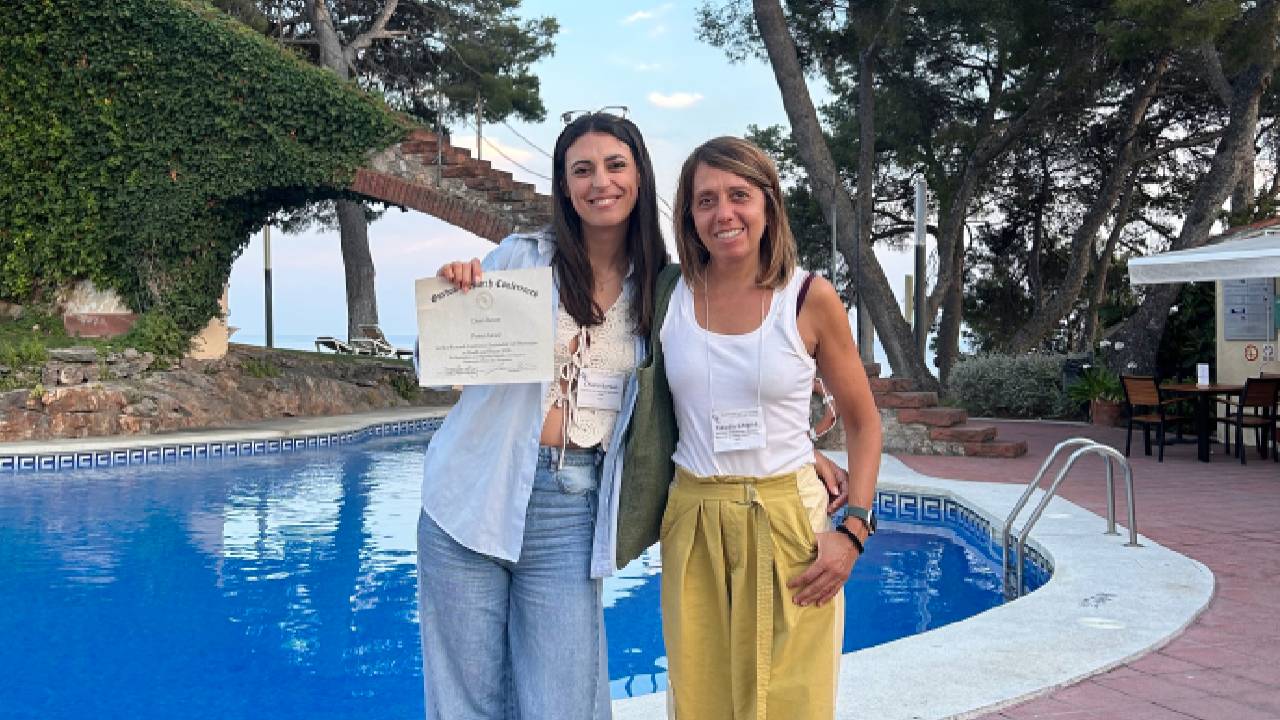
Dr. Barzan’s work focuses on the characterization of the molecular mechanisms that drive the development of tumor blood vessels and operate at the post-transcriptional level.
The conference was held from July 5 to 10, 2026, in Castelldefels (Barcelona, Spain) and brought together internationally renowned experts in the field of vascular biology. The Gordon Research Conferences (GRC) are a series of international, non-profit scientific meetings founded in the United States in 1931. They are widely recognized for their informal atmosphere and their emphasis on the discussion of cutting-edge, unpublished research.
Dr. Barzan receives the congratulations of the Director and the entire community of the Institute of Molecular Genetics “Luigi Luca Cavalli-Sforza” for this prestigious achievement.
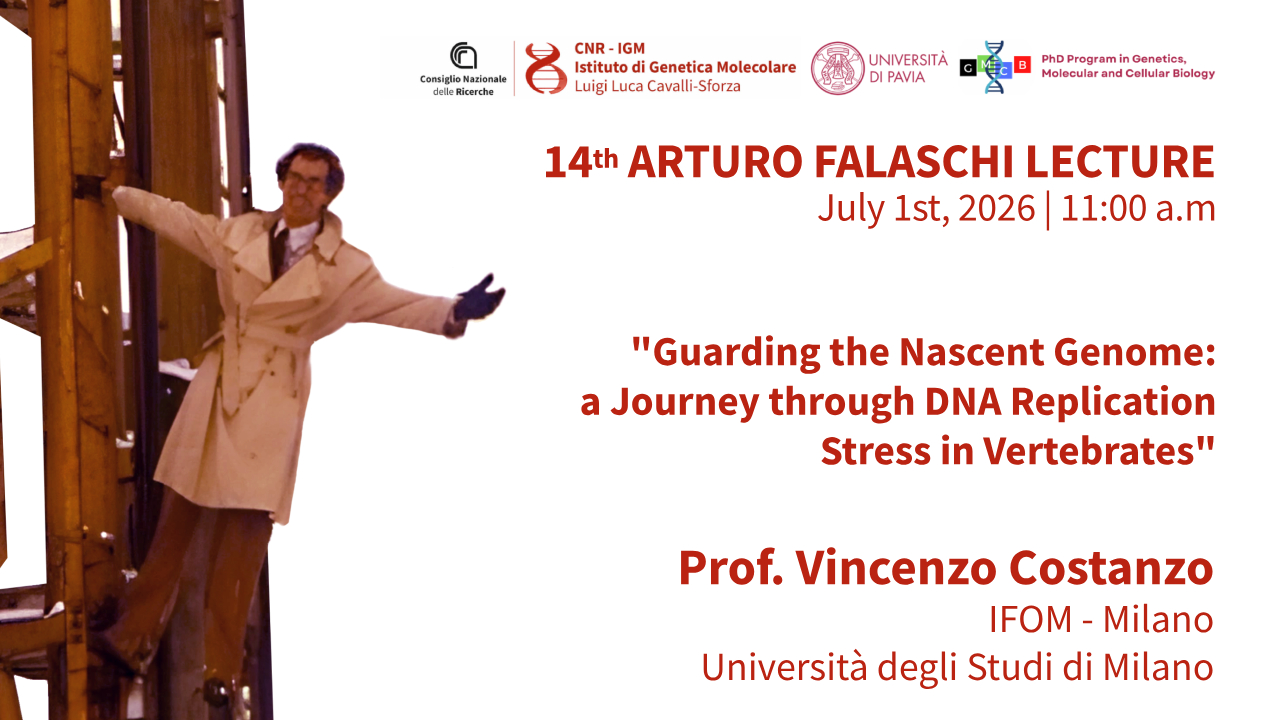
On Wednesday, July 1, at 11:00 a.m., IGM will host the 14th edition of the Arturo Falaschi Lecture, an event dedicated to the memory of the Institute’s first director. The lecture will be delivered by Professor Vincenzo Costanzo, a researcher at IFOM (The AIRC Institute of Molecular Oncology) and a faculty member at the University of Milan.
The title of the talk is “Guarding the Nascent Genome: a Journey through DNA Replication Stress in Vertebrates.”
The event is also part of the activities of the PhD Program in Genetics, Molecular and Cellular Biology.

On 16 and 17 June 2026, the Biomedical Campus Retreat will take place. This event offers an important opportunity for scientific exchange within the entire Cravino Campus community, bringing together research groups from the Department of Biology and Biotechnology, the Department of Molecular Medicine of the University of Pavia, and the IGM-CNR for two days dedicated to discussions on topics in biomedicine.
The rich program will be hosted at the University of Pavia’s Central Campus on Strada Nuova, specifically in the Aula del ’400 and the Aula di Disegno.
Structured into eight thematic sessions, the programme clearly reflects the interdisciplinary nature of the meeting. IGM personnel and junior researchers are strongly represented, with several short talks scheduled across both days. On the first day, presentations will feature Chiara Barzan (“A novel regulatory circuit required for tumor angiogenesis and cancer growth”), Laura Zannini (“Exploring the nucleolar function of TSPY-Like 2”), Nadia Tagliaferri (“From Repeat Expansion to DNA Repair Defect: Unraveling the Molecular Basis of CANVAS”), Luca Zardoni (“Mechanisms of RNA:DNA hybrid-driven DNA damage”), and Gaia Veniali (“Exploring the role of skin tumor microenvironment in 3D NER-deficient models”).
The same day will also feature a keynote lecture by Fabrizio d’Adda di Fagagna (“Telomere biology in health and diseases”).
On the second day, IGM researchers will continue to showcase their work, with talks from Donata Orioli (“NER-defective disorders, from patients to molecular mechanisms”), Francesca Brevi (“Proteostasis perturbation and the integrated stress response contribute to trichothiodystrophy”), Adelaide Riccardi (“Targeting a Deubiquitinating Enzyme Attenuates DNA Damage Accumulation in Cellular Models of Amyotrophic Lateral Sclerosis”), and Giorgia Zadra (“Uncovering systemic-tumor metabolic crosstalk in prostate cancer microenvironment remodeling to inform combination therapies”).
The full programme is available on the event website: Biomedical Campus Retreat | Dipartimento di Biologia e Biotecnologie “Lazzaro Spallanzani”

On June 15th, 2026, at 02:30 PM, the seminar titled “Metabolic Programming of Innate Lymphocytes in health and during tumor development” will be held in the Falaschi Lecture Hall at the Institute of Molecular Genetics “Luigi Luca Cavalli-Sforza” of the CNR in Pavia.
Speaker: Laura Surace, Ph.D
Biography
“After a training in molecular biology and biochemistry at the University of Pavia, I joined the ETH/UZH PhD Program in Zürich (Tumor Immunology – van den Broek lab). I was awarded 2 fellowships (SNSF, Marie Curie) for my PostDoc at Institut Pasteur (Human Immunology – Di Santo Lab). I moved to the University of Bonn mid-2021 first as research associate to join the COVID consortium in the Wilhelm lab (Metabolic Physiology and Dietary Immunology) and then I became a group leader beginning of 2023. In August 2024, I was promoted to Assistant Professor for Tumor Immunometabolism (tenure-track to full Prof.) at the Medical Faculty of the University of Bonn.”

On 6 and 7 May 2026, the IGM Retreat 2026 was held in Pontenure. The event was designed to foster internal discussion, provide scientific updates, and share the Institute’s organisational perspectives. The programme brought together the Institute’s management, research staff, and technical-administrative teams over two days featuring presentations, discussions, and informal networking opportunities.

On April 29, 2026, at 12:00 PM, the seminar titled “La divulgazione della scienza e le vitamine per le idee” will be held in the Falaschi Lecture Hall at the Institute of Molecular Genetics “Luigi Luca Cavalli-Sforza” of the CNR in Pavia.
Speaker: Andrea Bellati
Science Communicator, Podcaster, Author

| During the Annual Conference of the CNR Department of Biomedical Sciences, the Giovanni Maga Prize—a distinction dedicated to young researchers who have distinguished themselves through the quality and originality of their scientific contributions in the research areas pertaining to the Department- was awarded. The initiative aims to promote emerging talent and to support the development of new generations of scientists in the spirit of scientific excellence. The evaluation criteria included originality, international relevance, potential applications, and the overall quality of the candidates’ scientific curricula.
The 2026 Edition Winners In Memory of Giovanni Maga The Prize Awarded by IGM
|
